You’ve done everything right. Vitamin C in the morning, SPF you actually reapply, maybe a brightening serum you swear by. And still, those patches across your cheeks or above your lip have decided to stay. If that’s you, take a breath, because melasma is one of the most common pigment concerns we see, and it’s also one of the most misunderstood.
Here’s the thing worth knowing up front: melasma is stubborn by design. It isn’t a sign you’re doing something wrong. It’s a pigment condition with real biological drivers, and once you understand what’s fueling it, treating it starts to make a lot more sense.
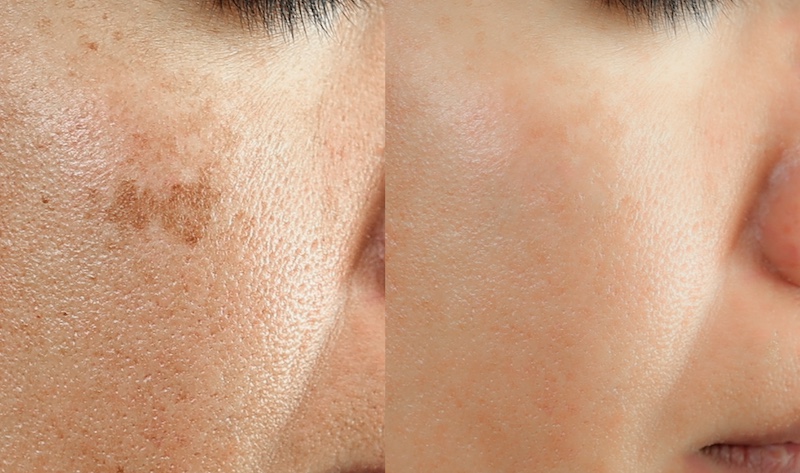
Melasma shows up as brown or gray-brown patches, usually on the face, and it happens when the pigment-producing cells in your skin go into overdrive. Three main triggers set that off: sun exposure, hormones, and genetics. There are two main causes of melasma: radiation, whether ultraviolet, visible light, or infrared, and hormones, with ultraviolet and infrared radiation from the sun being key in making it worse.
The hormonal piece is why so many women first notice melasma during or after pregnancy, or after starting birth control. Estrogen and progesterone directly stimulate melanin production, which is why melasma affects up to 50% of pregnant women and is strongly associated with hormonal contraceptives and menopause.
And then there’s the sun, which is a big deal here on Long Island. Between summers at Jones Beach and the everyday glare that bounces off the water, our skin gets more UV than we tend to give it credit for. The frustrating part? Ultraviolet light stimulates pigment cells to make more melanin, and even small, everyday doses, like walking outside or driving, can bring melasma back after it has faded. That’s why melasma can feel like a moving target. dermatologist-nyc
This is the part most people miss. A flat brown spot left over from years of sun is not the same as true melasma, and the difference changes how we treat it. Melasma comes in three subtypes: epidermal, dermal, and mixed, and the deeper the pigment sits, the more strategic the approach needs to be.
Melasma can also be reactive. Treat it too aggressively and it can actually darken, which is exactly why a professional assessment matters more here than with almost any other skin concern. Guessing is how people end up more frustrated than when they started.
At our Merrick skin clinic, we look at your skin first and build a plan from there rather than reaching for a one-size-fits-all fix.
For sun-related pigment and photoaging, our Fotona laser treatments target discoloration and help break up excess pigment so your skin can clear it over the following weeks. When resurfacing is the right call, laser skin resurfacing can improve tone and texture at the same time.
For more sensitive or melasma-prone skin, we often start gentler. A treatment like BioRePeel brightens and evens tone without the harsh peeling that can backfire on reactive skin. Many clients do best with a combination approach spaced over a few months, paired with the right home care to protect their progress.
We won’t tell you a single session erases years of pigment, because that isn’t how melasma works. Treatment durability remains limited by relapse, and melasma often needs multi-target, combination-based strategies rather than a single quick fix. The clients who see the best results are the ones who commit to a plan and, honestly, to their sunscreen. nih
What we can tell you is that with the right treatment matched to the right type of pigment, meaningful, visible improvement is realistic.
If you’ve been quietly fighting dark spots that won’t quit, come let us take a proper look. We work with clients throughout Merrick and across Long Island, and we’ll give you a straight read on what’s treatable and where to start. Book a consultation with Skulptd and let’s build a plan that fits your skin.
This article is for general education and isn’t a substitute for personalized medical advice. Melasma can overlap with other conditions, so a professional evaluation is always the best first step.
Sources